
The Only 12 Things You Need
to Clean Your Whole Home
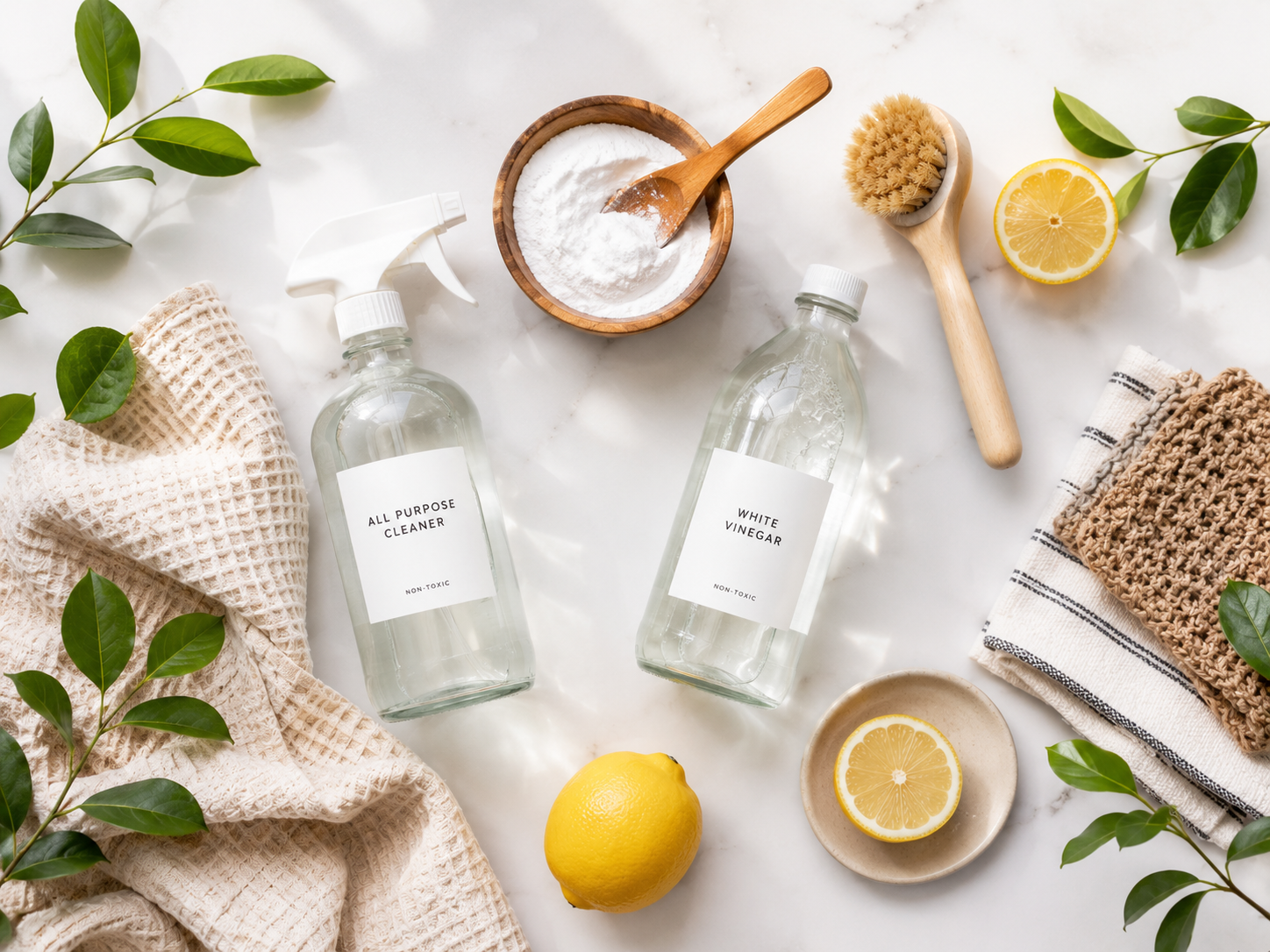
Most of us have a cabinet under the sink that looks like a chemistry experiment. One product for the toilet, one for the tub, one for the counter, one for the floor — each with its own list of ingredients you can’t pronounce. Here’s the truth: you don’t need any of it. Twelve simple, non-toxic products will handle everything in your home, better.
I used to buy whatever cleaning product had the most convincing label. “Deep clean.” “Hospital grade.” “Kills 99.9% of germs.” Then I started reading what was actually in them — and more importantly, what those ingredients were doing to the air in my home, to my skin, and to my family. That’s when I simplified.
What follows is the exact cleaning kit I use now. Nothing extra, nothing toxic, nothing that costs more than it should.
White distilled vinegar
The workhorse of natural cleaning. Cuts through grease, dissolves mineral deposits, deodorizes, and disinfects. Dilute 1:1 with water in a spray bottle for an all-purpose cleaner that handles counters, appliances, and glass. Do not use on natural stone — it will etch the surface.
Baking soda
A gentle abrasive that scrubs without scratching. Paste it with a little water for sinks, tubs, and oven interiors. Pour it down drains with vinegar to clear minor blockages. Sprinkle it in trash cans and on carpets before vacuuming to neutralize odors.
Castile soap
A concentrated plant-based soap that dilutes into a dozen different uses — dish soap, hand soap, floor cleaner, bathroom scrub, laundry booster. Dr. Bronner’s is the most widely available. A single bottle lasts months.
Hydrogen peroxide (3%)
A genuine disinfectant that breaks down into water and oxygen — no residue, no fumes. Use it straight from the brown bottle on cutting boards, toilet seats, and anywhere you want real sanitizing power. Never mix with vinegar — together they form a corrosive acid.
Rubbing alcohol (70% isopropyl)
The best thing for glass, mirrors, and electronics. It evaporates quickly, leaves no streaks, and kills bacteria on contact. Mix with water and a drop of castile soap for a streak-free window spray that outperforms anything in a blue bottle.
Essential oils (tea tree + lavender)
Tea tree oil is antifungal and antibacterial — add 10 drops to your all-purpose spray for extra disinfecting power and a clean, fresh scent. Lavender is calming and also mildly antibacterial. Together they make your cleaning smell intentional rather than chemical.
The simple formula: Vinegar spray for everyday surfaces. Baking soda paste for scrubbing. Hydrogen peroxide for disinfecting. Castile soap for everything that needs actual washing. That covers 95% of what you’ll ever need to clean.
Microfiber cloths
Replace paper towels and single-use wipes entirely. A good microfiber cloth picks up bacteria and dust with just water — no product needed for light cleaning. Wash and reuse hundreds of times. Get at least 12 so you always have clean ones ready.
A good scrub brush
One stiff-bristled brush handles grout, tile, and tub scrubbing without any scouring pads that scratch surfaces or shed microplastics. Look for one with a replaceable head or natural bristles. It will last years.
Washing soda (sodium carbonate)
Stronger than baking soda, washing soda cuts through heavy grease and built-up grime in ovens, on stovetops, and in laundry. It’s the ingredient that makes DIY laundry detergent actually work. Find it in the laundry aisle — it’s not the same as baking soda.
Lemon juice
Fresh or bottled, lemon juice dissolves hard water stains on faucets and showerheads, brightens grout, and deodorizes garbage disposals. Combine with baking soda for a fizzing scrub that smells incredible. A half lemon rubbed on a cutting board removes stains and odors naturally.
Reusable spray bottles
Two or three quality glass or BPA-free plastic spray bottles let you make your own blends and refill them indefinitely. Label them clearly. This is the infrastructure that makes a DIY cleaning kit actually practical day-to-day.
A HEPA vacuum
The one piece of equipment worth spending money on. A true HEPA filter captures particles that a regular vacuum just recirculates into the air — dust mites, pet dander, fine particulate matter. For people with allergies or young children especially, this is one of the highest-impact swaps you can make.
The bottom line
Twelve things. Most cost under five dollars. None of them will off-gas chemicals into your home, irritate your skin, or contribute to indoor air pollution. Once you make the switch, it’s hard to go back — not because it requires discipline, but because it’s genuinely simpler.
Comments